https://www.youtube.com/@rajkushvanttechnology3433
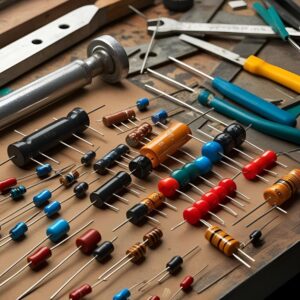 Basic Components of Electronics – Complete Guide for Beginners
Understanding the basic components of electronics is the first and most important step toward learning how electronic devices work. Whether you are repairing TVs, laptops, computers, home theaters, or designing your own circuits, knowing these components will help you troubleshoot faults confidently.
In this blog from Rajkushvant Technology – Repair, Sales & Service Center (Dharwad), we explain each component with simple examples, working principles, and practical use cases.
What Are Electronic Components?
Electronic components are the building blocks of every electronic circuit. for more info visit https://www.youtube.com/@rajkushvanttechnology3433
They:
-
- Control current and voltage
-
- Store energy
-
- Process signals
-
- Convert one form of energy to another
-
- Protect circuits from over-current or short-circuit
From small SMD parts to large power devices, every component has a specific role in circuit design and repair.
1. Resistor (R)
Function
-
- Controls/reduces current flow
-
- Protects other components
-
- Used for voltage division
Where Used
-
- TV motherboards
-
- Laptop circuits
-
- LED backlight circuits
-
- Power supplies
Key Points
-
- Measured in Ohms (Ω)
-
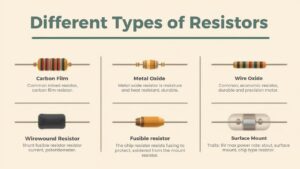
- Types: Fixed, Variable (Potentiometer), SMD
2. Capacitor (C)
Function
-
- Stores and releases electrical energy
-
- Filters noise
-
- Smoothens voltage in power circuits
Types
-
- Electrolytic
-
- Ceramic
-
- Tantalum
-
- Film capacitor
Common Uses
-
- SMPS power boards
-
- TV power supply
-
- Laptop motherboard VRM
-
- Audio circuits
Symptoms of Faulty Capacitor
-
- No power
-
- Restarting issue
-
- Flickering display
3. Inductor (L) / Coil
Function
-
- Stores energy in magnetic field
-
- Filters AC ripple
-
- Used in DC-DC conversion
Where Used
-
- SMPS
-
- LED TV power boards
-
- Laptop charging section
4. Diode
Function
-
- Allows current in one direction
-
- Used for rectification and protection
Types
-
- Rectifier Diode
-
- Zener Diode
-
- Schottky Diode
-
- LED (Light Emitting Diode)
Applications
-
- AC to DC conversion
-
- Reverse voltage protection
-
- Backlight circuits
5. Transistor
Function
-
- Works as an electronic switch or amplifier
Types
-
- NPN / PNP
-
- MOSFET
-
- IGBT
-
- SMD transistors
Where Used
-
- SMPS power supply
-
- Motherboard VRM
-
- Audio amplifiers
-
- LED drivers
Fault Symptoms
-
- No power
-
- Overheating
-
- Short circuit
6. IC (Integrated Circuit)
What It Does
-
- Performs advanced functions
-
- Contains multiple mini components internally
Types
-
- Power IC
-
- CPU / MCU
-
- Audio IC
-
- Charging IC
-
- EEPROM IC
Use Cases
-
- LED/LCD TV motherboard
-
- Laptop controller section
-
- Smart board/Interactive panel
-
- Home theater main board
7. Transformer
Function
-
- Steps up or steps down AC voltage
-
- Provides isolation
Where Used
-
- CRT and LED TV SMPS
-
- Laptop adapters
-
- Inverter circuits
8. Relay
Function
-
- Electrically operated switch
-
- Controls high voltage with low voltage
Applications
-
- Power control circuits
-
- Stabilizers
-
- Home appliances
9. Fuse
Function
-
- Protects the device from overload
-
- Cuts power during short circuit
Common Fault Example
-
- TV full dead
-
- Laptop no power
-
- SMPS not turning on
10. Switch
Function
-
- Manually opens or closes an electrical circuit
Examples
-
- Power button
-
- Mode switch
-
- Selector switch
11. Battery
Function
-
- Stores DC energy
-
- Powers portable devices
Used In
-
- Laptops
-
- Remote controls
-
- Toys
-
- UPS backup
12. Potentiometer (Variable Resistor)
Function
-
- Adjusts resistance manually
-
- Used for control and calibration
Applications
-
- Volume control
-
- Brightness control
-
- Audio mixers
Why Learning These Components is Important?
Understanding basic components helps technicians and students:
-
- Diagnose PCB faults faster
-
- Repair TVs, laptops, computers effectively
-
- Learn advanced chip-level troubleshooting
-
- Reduce replacement cost
-
- Improve repair accuracy
-
- Design custom circuits
Final Words
Electronic components may look small, but they play a huge role in every device. Whether you are a beginner or a professional technician, mastering these basics builds a strong foundation for troubleshooting and design work.
At Rajkushvant Technology, we repair and service LED TVs, laptops, computers, home theaters, interactive panels, and electronic PCBs, and we also provide online chip-level training on YouTube. https://www.youtube.com/@rajkushvanttechnology3433