
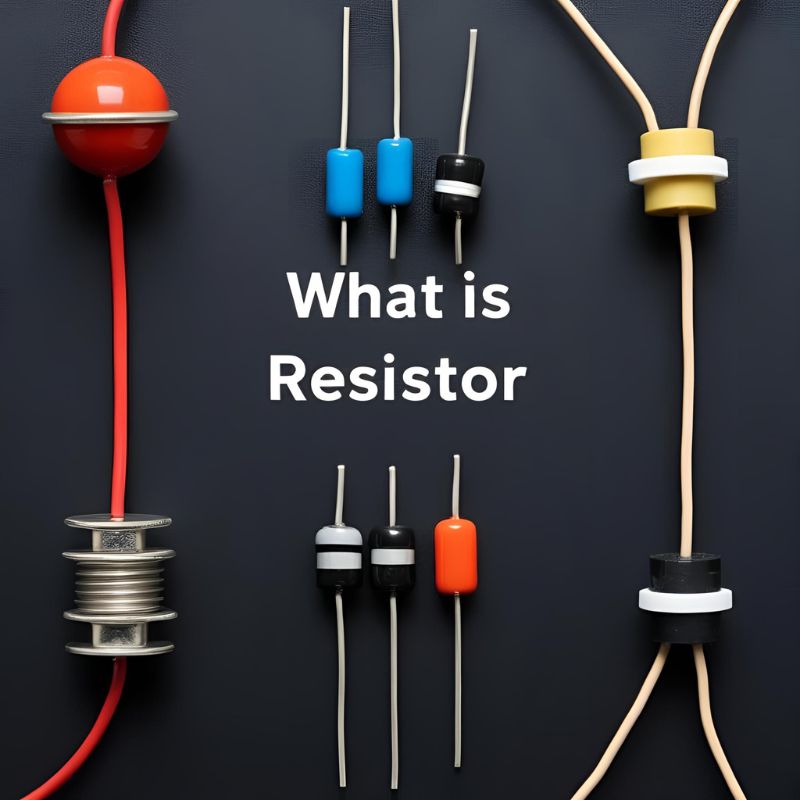
When it comes to electronics, few components are as fundamental and widely used as the resistor. Whether you’re a beginner, a DIY enthusiast, or a professional working with advanced circuits, understanding resistors is essential.
In this blog, we’ll dive deep into everything you need to know about resistors — what they are, how they work, their types, color codes, applications, and how to choose the right one for your project.
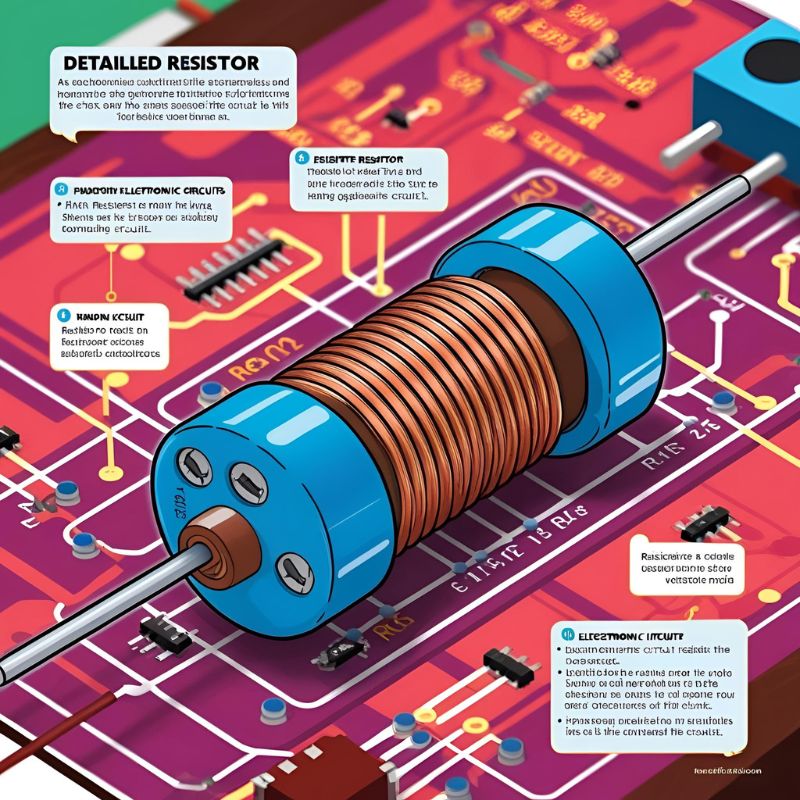
🔌 What is a Resistor?
A resistor is a passive electrical component that resists or limits the flow of electric current in a circuit. It plays a crucial role in controlling voltage and protecting sensitive components.
Key Features:
- Symbol: Represented by a zigzag line (US) or a rectangle (International).
- Unit of Resistance: Ohms (Ω)
- Function: To drop voltage, limit current, and divide voltages in circuits.
💡 Why Resistors are Important
Resistors may look simple, but they are vital in electronics. Here’s why they matter:
- Current Limiting: Protect LEDs and ICs from excess current.
- Voltage Division: Create reference voltages using voltage divider networks.
- Signal Conditioning: Filter or modify signals in analog circuits.
- Heat Generation: In applications like heaters or to dissipate energy.
- Biasing: Help in setting bias points in amplifiers.
🧪 How Does a Resistor Work?
A resistor works on Ohm’s Law, which states:
V = I × R
Where:
- V = Voltage across the resistor
- I = Current flowing through it
- R = Resistance in ohms
By inserting a resistor in a circuit, the flow of current is reduced according to its resistance value.
📚 Types of Resistors
Resistors come in many types, depending on construction, application, and materials. Let’s break them down:
1. Fixed Resistors
- Have a set resistance value.
- Commonly used in all electronic circuits.
Types:
- Carbon Film Resistor
- Metal Film Resistor
- Wire-Wound Resistor
2. Variable Resistors
- Resistance can be adjusted manually.
- Ideal for tuning circuits.
Examples:
- Potentiometers
- Rheostats
- Trimmers
3. Special Resistors
- Designed for specific functions.
Examples:
- Thermistors (temperature-sensitive)
- LDRs (Light Dependent Resistors)
- Varistors (voltage-dependent)
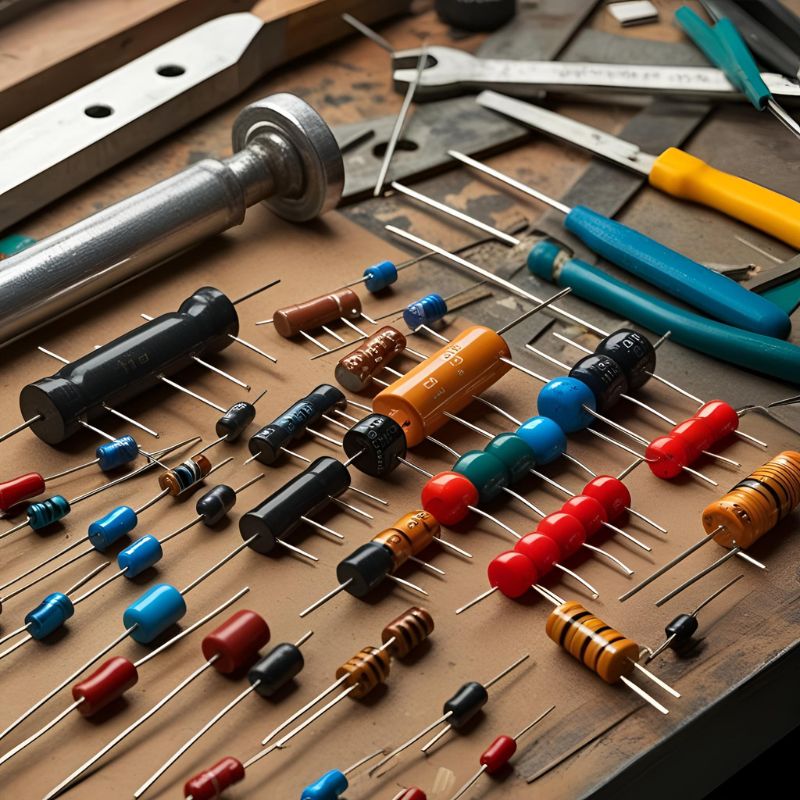
🎨 Understanding Resistor Color Code
Most resistors are small and marked with colored bands that indicate their value. Here’s how to decode them:
Color Code Chart:
| Color | Digit | Multiplier | Tolerance |
|---|---|---|---|
| Black | 0 | ×1 | – |
| Brown | 1 | ×10 | ±1% |
| Red | 2 | ×100 | ±2% |
| Orange | 3 | ×1k | – |
| Yellow | 4 | ×10k | – |
| Green | 5 | ×100k | ±0.5% |
| Blue | 6 | ×1M | ±0.25% |
| Violet | 7 | ×10M | ±0.1% |
| Grey | 8 | ×100M | ±0.05% |
| White | 9 | – | – |
| Gold | – | ×0.1 | ±5% |
| Silver | – | ×0.01 | ±10% |
| None | – | – | ±20% |
Example:
A resistor with bands Red, Violet, Yellow, Gold = 2 (Red), 7 (Violet), ×10,000 (Yellow), ±5% (Gold)
= 270kΩ ±5%
🔍 How to Choose the Right Resistor
Choosing the right resistor depends on your circuit’s requirements. Here’s what to consider:
- Resistance Value (Ω): Based on the voltage and current.
- Power Rating (Watt): Make sure the resistor can handle the power without overheating.
Use: P = V × I or P = I² × R - Tolerance: Choose tighter tolerance for precision circuits.
- Type: Metal film for low noise; wire-wound for high power.
⚙️ Common Applications of Resistors
Resistors are everywhere — from simple toys to complex machines. Here’s where you’ll find them:
- LED Circuits: To prevent LEDs from burning out.
- Voltage Regulators: Maintain consistent voltage.
- Amplifiers: Set gain and feedback paths.
- Microcontroller Circuits: Pull-up or pull-down resistors.
- TVs, Computers, and Appliances: In almost every internal circuit.
🔧 Testing a Resistor Using a Multimeter
To check a resistor’s value:
- Set multimeter to ohms (Ω) mode.
- Place probes on both ends of the resistor.
- Read the value on the screen.
Make sure the resistor is not connected in a circuit while testing to avoid inaccurate readings.
🌡️ What Happens If You Use the Wrong Resistor?
Using the wrong resistor can cause several problems:
- Too Low Resistance → Excess current → Burnt components.
- Too High Resistance → Insufficient current → Circuit won’t function.
- Low Power Rating → Resistor overheats and fails.
Always calculate the correct value and power rating before adding a resistor to your project.
📦 Where to Buy Quality Resistors?
You can buy resistors from:
- Local electronics stores
- Online platforms like Amazon, Robu, or Digikey
- [Visit Our Shop – Rajkushvant Technology]
We stock a wide range of resistors and other components at the best price! Drop by our shop at Line Bazar, Dharwad.
🚀 Quick Tips for Beginners
- Start with 1/4 watt resistors — suitable for most small projects.
- Always check color code before soldering.
- Use resistor calculators or mobile apps for quick help.
- Keep a resistor kit with multiple values on hand.
- Practice identifying values without measuring — great for learning!
🧠 Final Thoughts: The Power of a Simple Resistor
The humble resistor is the unsung hero of electronics. Without it, circuits would malfunction, components would fry, and devices wouldn’t work properly. Whether you’re building a DIY LED lamp, repairing a laptop motherboard, or designing a microcontroller project, understanding resistors is a foundational skill.
So next time you hold a small, striped resistor in your hand, remember: this tiny component is the backbone of your electronic masterpiece.
📌 Keyword Focus: Resistor, What is a resistor, Types of resistors, Resistor color code, Uses of resistor, Resistor applications, Resistor testing, Ohm’s Law.
📍 Location Keyword (optional): Resistor supplier in Dharwad | Buy resistors in Line Bazar